
With all the talk recently about GMOs, pesticides, contaminants and heavy metals in our food supply, one can easily get overwhelmed and left wondering if there is anything in a grocery store that is still safe to eat. Each week we get emails from Optimal Life readers asking us what they can do to protect themselves from common unwanted Poor Food ingredients and most recently we have been touching on the latest GMO studies. However, due to the recent articles by Consumer Reports, arsenic and lead have been topping that query. While we cover this topic more fully inRICH FOOD, POOR FOOD (release February, 2013) this blog is going to share with you how to reduce arsenic and lead in some of today’s most common foods by following a few simple guidelines. While our solutions won’t always eliminate the arsenic and lead completely, they can help you to greatly reduce your overall exposure.
Our goal is not to sound the alarms and scare you away from any of the specific foods we mention in this blog, but rather to give you a bit more information about the presence possible dangers so that you can determine your level of exposure. While a small serving of one or two of these foods may be well within the safe guidelines perhaps, if you over indulge in one or more of these foods on a regular basis you could be putting yourself needlessly at risk.
THE JUICE PROBLEM: This past January we first began hearing about the problems of heavy metals appearing in bottled juices. According to Consumer Reports, while the EPA only allows 10 ppb (parts per billion) in our drinking water, samples from bottled apple juice currently on the market registered levels up to 13.0 ppb and grape juice samples were even higher registering levels up to 24.7 ppb. As for lead, one in four samples had higher levels than the FDA’s bottled water limit of 5 ppb. Some samples actually contained 500% more! This is disturbing because children are some of the largest consumers of juice and their little bodies are far more susceptible to smaller quantities of these metals. While the levels are not high enough for acute heavy metal poisoning many studies have shown that long-term exposure can cause difficulty in language skills, memory and other brain functions. Additionally,Ana Navas-Acien, M.D., Ph.D., a physician—epidemiologist at Johns Hopkins University’s Bloomberg School of Public Health, was the first to suggest, in a 2008 study in the Journal of the American Medical Association (PDF) that low-level arsenic exposure was associated with the prevalence of type 2 diabetes in the United States.
THE SOLUTION: Unfortunately, simply choosing 100% organic juice does not eliminate your family’s exposure to arsenic and lead. While organic standards prohibit the use of synthetic fertilizers and most pesticides, organic juices still may contain arsenic if they’re made from fruit grown in soil where arsenical insecticides had been used in the past. A great tip to reduce exposure, if you feel that these levels might affect your loved ones, is to pour half juice and half water rather than 100% juice. Not only will you reduce the amount of arsenic and lead in each glass, but you will be ingesting less sugar (fructose) overall, which in turn will cause less of an insulin spike.
THE RICE PROBLEM: Recently, a November 2012 report by Consumer Reportsstated that arsenic levels in many brands of rice (brown more than white) as well as popular rice products like baby formula, rice pastas, rice syrups, and rice-based cereals are at worrisome and potentially dangerous levels. With so many people now choosing gluten-free foods, rice consumption has increased, and with it, exposure to both inorganic arsenic (a carcinogen) and organic arsenic (less toxic, but still a concern). For more of a discussion on the benefits of white vs. brown rice and some of the pros and cons to each you can check out Chris Kresser’s blog on this topic here.
THE SOLUTION: To reduce your exposure scientists at Consumer Reportsrecommend restricting rice and rice-based hot cereal, ready-to-eat cereal, rice pasta, and rice cakes to two to three servings a week for adults, and one to one-and-a half servings a week for children. And proper preparation of rice can aid in limiting exposure. Thoroughly rinsing and cooking your rice with six cups of water to one cup of rice and then draining the excess water is one way to reduce this harmful carcinogen. While this will lead to higher levels of micronutrient loss than conventionalmethods, it can reduce inorganic arsenic content by about 30 percent. Additionally, purchasing foreign rice can be a safeguard, because according to the Institute ofAgriculture and Trade Policy “American- grown rice contains 1.4 to 5 times more arsenic on average than does rice from Europe, India and Bangladesh— scientists think the likely culprit is the American practice of growing rice on former cotton fields contaminated with long-banned arsenic pesticides.”
THE BACON (CURED MEATS) PROBLEM: Last week we reported that we felt while others in the industry discussed the safety of nitrates in cured meats, many were overlooking the problem of heavy metals in this synthetic additive. You can read the entire blog here. We first dispelled the myth that nitrates, either from sodium nitrate or from celery salt, caused cancer because absent a nitrosamine precursor, no cancer-causing properties are evident. However, we also discovered that The Food Chemical Codex allows for up to 10,000 ppb (parts-per-billion) of lead and 3,000 ppb of arsenic to be present in synthetic sodium nitrate. Remember, the levels for drinking water, at which these chemicals present a serious health risk, set forth by the EPA are 15 ppb and 10 ppb, respectively. This means that the “acceptable levels” to be found as a residue in sodium nitrate are roughly 667x and 300x the levels recognized as deleterious to human health, again respectively.
We would like to add, that this is should not be of concern to those who only eat bacon on occasion, or limit their bacon slices to one or two slices per day. However, with whole cookbooks and TV shows now on the subject of bacon, and many Paleo cookboods including bacon in one form or another as an ingredient in most every recipe, we felt it was worth a mention. Here’s the reasoning. While it is true that the “acceptable levels” in sodium nitrate residue are too high, if you take into account how little is added into the bacon itself your risk becomes much smaller. In fact, not a real concern at all. However, for those who eat bacon by the pound, purchase cured sandwich meats and enjoy hot dogs on a regular basis, this sodium nitrate becomes a reoccurring ingredient we feel is completely, unnecessarily opening the door to unacceptable levels of arsenic and lead exposure.
Additionally, after reading thousands upon thousands of labels as part of the research for RICH FOOD, POOR FOOD, we have become acutely aware that those companies who are removing the synthetic nitrates and replacing them with celery and sea salt, are also more aware as to the quality of the other ingredients in their products. That is because when companies realize that consumers are searching for better, healthier products, they begin to revise their recipes and luckily, the improvements in ingredient quality are often across the board. In this way, removing synthetic nitrates from the approved ingredients list on the products you purchase also helps to limit your exposure to other POOR FOOD ingredients that all too often come hand in hand, such as BHT, BHA, dextrose, modified food starch, added sugars and HFCS.
THE SOLUTION: Due to bacon’s high micronutrient content, and the fact that it’s plain old delicious, we don’t suggest you put aside this pork product. We do however, recommend that you choose products, such as bacon, sandwich meats, and hot dogs, cured with celery or sea salt to limit heavy metal exposure. While there may not be a huge amount of lead and arsenic in each bite, because so little is used in the curing process, why take any risk at all? And again, this is especially true for those of you who eat bacon, sandwich meats and/or hot dogs on a daily basis.
THE POULTRY PROBLEM: Here is a little bit of info from Rich Food, Poor Food on this topic:
“According to the FDA, poultry farmers are permitted to feed arsenic, a recognized carcinogen to birds, for “growth promotion, feed efficiency, and improved pigmentation.” The arsenic affects the blood vessels in chickens and turkeys, causing them to appear pinker and therefore fresher. When the Minnesota-based advocacy group Institute for Agriculture and Trade Policy tested conventional poultry, it found the poison (arsenic) in 55 percent of chicken parts (breast, thighs, and livers) tested, with the highest amount–21.2 parts per million–occurring in generic brands. If you want to know how safe that is, you should know that the EPA considers 10 parts per billion in drinking water to be high enough to pose a cancer risk. The chickens tested had up to2,000 times more of these cancer causing arsenic levels! The European Union has outlawed the use of arsenic since 1999, and you should ban it from your body by choosing organic birds.”
THE SOLUTION: Choose Organic Poultry! This one is an easy fix, folks. Buying USDA-certified organic chicken is a great solution, since producers using this label are legally prohibited from using arsenic. Not only is there no arsenic in the chicken feed, but you are also guaranteed that the birds must be fed 100 percent organic, non-GMO feed that contains no animal byproducts. It also must be free of pesticide, chemical fertilizers, hormones, and antibiotics, and the birds must receive outdoor access (but no duration or location requirements are indicated). Better yet, purchase ‘pastured’ poultry (from a farm that follows the organic guidelines) and serve up a far more micronutrient RICH chicken in your kitchen.
So, what is the take-away here? We want to be clear, we aren’t asking anyone to sound an alarm, or run through the streets scared away from the rice served along side their Chinese stir fry. The intent of our message is awareness, simply offering you information you can use to make the smartest choices based on your dietary philosophies. The fixes we offer are pretty easy, and if you feel you might be better off eliminating some of the risk, well… you now have the tools. Throughout the next few months we will be sharing great shopping, safety and food preparation tips with you that increase the micronutrient value of your foods while making them safer through the elimination of over 150 POOR FOOD ingredients that we have identified. No one is perfect, and we can’t expect to live a life where none of these POOR FOOD ingredients creep in every now and again. However, by simply buying products that eliminate these possibly hazardous add-ins you are sending a message to the stores and the manufacturers that food safety and high quality ingredients are important to you. Together we can make a difference. Until next time…Healthy Shopping!
Oh, and if you don't currently receive our Optimal Life blog we invite you to become and Optimal Life Insider by simply entering your email address in the Optimal Life call out box on the upper right hand side of this page! Thank you! (we respect your privacy and NEVER sell email lists!)
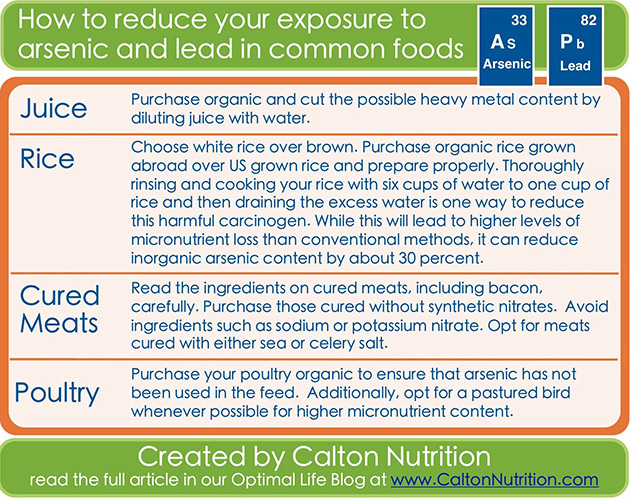
CLICK HERE TO DOWNLOAD INFO-GRAPHIC – Feel free to share it with your friends!